Contact Us Today312-702-1293

Recent Blog Posts
How Does Illinois Handle Child Custody Matters For Same-Sex Couples?
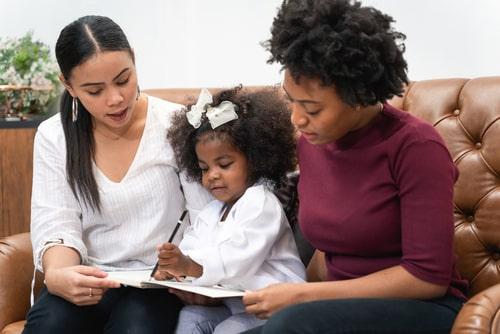 When same-sex parents separate, questions can arise about how custody will be handled. Illinois uses the same child custody standards for same-sex parents as for other parents.
However, each person’s legal relationship to the child must be clear. If you are facing a custody dispute in 2026, a Joliet, IL child custody attorney can help you understand your rights and protect your relationship with your child.
What Custody Rights Do Same-Sex Parents Have in Illinois?
Same-sex parents who are legally recognized as parents can seek physical and legal custody. In Illinois, custody is called the allocation of parental responsibilities and is divided into parenting time (visitation) and decision-making responsibilities (legal custody). A parent’s sexual orientation does not give them fewer rights, and a biological parent does not automatically have greater rights than a non-biological legal parent.
Do I Need a Financial Restraining Order During My Divorce?
 The divorce process can be stressful, and financial uncertainty can make it harder. As you separate from your spouse, you could become concerned about what will happen to your money or property before the divorce is final.
A financial restraining order can protect marital property when there is a real risk that a spouse will transfer or dispose of assets during an Illinois divorce. If you are concerned about your spouse's financial actions in 2026, a Will County, IL divorce attorney can help you protect your marital assets.
What Is a Financial Restraining Order in an Illinois Divorce?
A financial restraining order limits what a spouse can do with property while a divorce is pending. It can stop major changes to bank accounts, investments, real estate, or other assets before the court divides the marital estate.
Under 750 ILCS 5/501, either spouse can ask the court for a temporary restraining order or preliminary injunction. The order can stop a spouse from transferring or disposing of property. A spouse asking for this protection must give the court evidence that supports the request.
Can My Spouse Get Part of My Inheritance in an Illinois Divorce?
 An inheritance can carry real emotional weight, especially when it comes from someone who mattered to you. If you later face a divorce, that history makes it even more important to understand whether that money or property has to be divided with your spouse.
In Illinois, what you do with inherited property after receiving it can affect how it’s treated during a divorce. If you have inherited money or other valuable property, an Orland Park, IL property division attorney can help determine whether it should remain separate from your marital estate in 2026.
Is an Inheritance Considered Marital Property in Illinois?
Illinois generally treats an inheritance left to one spouse as nonmarital property. Under 750 ILCS 5/503, property received by gift, legacy, or descent is excluded from marital property. This means it belongs to that spouse rather than to the marital estate.
Can a Single Father Get Equal Parenting Time in Illinois?
 Single fathers often worry that living apart from their child's mother will limit the role they can have in their child's life. This can be an even bigger concern if you were never married to your child's mother, and the child has always lived mainly with her.
Illinois law does not ignore a single father’s rights or prevent him from having equal parenting time. Once legal parentage is established, a father can ask for a parenting schedule that gives him substantial or equal time with his child.
If you are trying to stay involved in your child's life in 2026, an Orland Park, IL fathers' rights attorney can help you with a parenting plan that protects your relationship with your child.
How Can a Single Father Establish His Parenting Rights in Illinois?
For a father who was never married to his child's mother, establishing legal parentage is the first step. Under 750 ILCS 46/201, parentage can be established in several ways. An unmarried father may sign a valid voluntary acknowledgment of parentage or have parentage established through a court proceeding. The law also recognizes a presumption of parentage in certain situations.
What Is the Difference Between a Prenuptial and Postnuptial Agreement in Illinois?
 Although nobody gets married with the intent to get divorced, more couples than ever are trying to avoid difficult and expensive divorce litigation or negotiation by signing marital contracts. Both prenuptial and postnuptial agreements help couples decide how they will handle property and other financial issues if their marriage ends.
The main difference between which of these is right for you comes down to when you want to sign the documents. A prenuptial agreement is made before marriage, whereas a postnuptial agreement is created after you are already married.
If you are planning a wedding or are already married in 2026, an Orland Park, IL family law attorney can help you decide whether a marital agreement makes sense for you.
When Do You Sign a Prenuptial Agreement in Illinois?
According to the Illinois Uniform Premarital Agreement Act, 750 ILCS 10/2, a prenup is an agreement made in contemplation of marriage. In other words, the couple makes the agreement because they plan to marry, and it officially takes effect when they get married.
Is Mediation or Collaborative Divorce Right for Your Illinois Case?
 According to the CDC, there were 672,502 divorces and annulments in 45 reporting states and Washington, D.C., in 2023. Many couples settle the terms of their divorce through negotiation instead of asking a judge to decide every issue. Mediation and collaborative divorce are two options, and the right choice depends on how well you and your spouse communicate and how complex your finances are.
If you are ending your marriage in 2026, an Orland Park, IL divorce attorney can walk you through negotiation options before you file.
What Happens During Divorce Mediation in Illinois?
Divorce mediation uses a neutral mediator to help both spouses work toward an agreement. The mediator does not represent either spouse or give legal advice, so each spouse may benefit from consulting their own attorney during the process.
Should I Get an Annulment or a Divorce in Illinois?
 Many people think an annulment is a fast way out of a marriage. In reality, Illinois sets a high bar for proving that a marriage was never valid, so true annulments are rare. Because of that, most people who want to end a marriage must file for divorce instead.
If you are considering an annulment or divorce in 2026, a Joliet, IL divorce lawyer can review your situation and help you choose the right path.
When Is a Marriage Legally Invalid in Illinois?
Under the Illinois Marriage and Dissolution of Marriage Act, 750 ILCS 5/301, Illinois defines an annulment as a declaration of invalidity of marriage. The law allows it only in a few narrow situations. A marriage may qualify if:
- One spouse could not legally consent because of mental incapacity, alcohol, drugs, or another disabling condition.
What Legal Rights Do Single Mothers Have in Illinois?
 In Illinois, single mothers have enforceable rights when it comes to custody, child support, and making decisions for their children. Those rights exist whether you were ever married to the other parent or not. According to the Federal Reserve Bank of St. Louis, there were about 7.7 million one-parent families with children under 18 headed by mothers in the United States in 2025. Many of those mothers are not fully aware of what the law gives them by default and what they still need to take legal steps to secure.
If you are a single mother and you have questions about your family’s legal situation in 2026, an Orland Park, IL family law attorney can walk you through your options.
What Custody Rights Does an Unmarried Mother Have in Illinois?
When a child is born to unmarried parents in Illinois, the mother has full custody by default. Under 750 ILCS 46/204, a father has a legal presumption of parentage only if he was married to or in a civil union with the mother.
What Is a Guardian ad Litem and What Do They Do in an Illinois Custody Case?
 The U.S. Census Bureau reported that there were 10.9 million single-parent families with a child under 18 in the United States in 2022. Many of those families manage custody arrangements without conflict, but a significant number of cases become contested.
When parents cannot agree on child custody, an Illinois judge may appoint a third party to independently assess what is in the child's best interests. That person is called a guardian ad litem, or GAL. If a GAL has been appointed in your case, or if you think one might be, knowing what to expect can help you prepare. If you are dealing with a contested custody case in 2026, a Joliet, IL child custody attorney can help you protect your rights.
How Will My Divorce Affect My Business?
 If you own a business and are heading toward a divorce in 2026, the financial stakes are different from a typical divorce. A business is not just an asset on a spreadsheet. It is your income, your daily work, and often decades of effort.
The U.S. Small Business Administration reports that there are more than 34 million small businesses in the United States, meaning millions of business owners will face this exact situation at some point. A Homewood, IL divorce attorney can explain how Illinois property division law applies to your business.
Is Your Business Marital Property Under Illinois Law?
Whether your business counts as marital property is the first issue that needs to be resolved. Under the Illinois Marriage and Dissolution of Marriage Act (750 ILCS 5/503), marital property includes most assets either spouse acquired during the marriage. If you started or bought your business after the wedding, a court will almost certainly treat it as marital property. That is true even if your spouse has no ownership interest and is not named on any business documents.

From Our Blog
Contact Us Today
Set up a consultation with us to get legal help with your family law case. Call 312-702-1293 or fill out the form below:
Address
Orland Park, IL 60462
Contact
Social Media




From our office in Orland Park, we serve clients throughout the south and southwest suburbs of Chicago including but not limited to Bolingbrook, Chicago Heights, Country Club Hills, Crest Hill, Flossmoor, Harvey, Hazel Crest, Homewood, Hyde Park, Joliet, Kankakee, Lockport, Markham, Mokena, New Lenox, Plainfield, and South Holland.
Results listed are not a guarantee or indication of future case results.
15255 S. 94th Ave. 5th Floor, Orland Park, IL 60462
312-702-1293